When You Should Replace Your Jockey Wheels
| June 26 2026When Should You Replace Your Jockey Wheels?
Jockey wheels — those two small derailleur pulleys spinning away at the back of your drivetrain — are easy to ignore. They rarely demand attention the way a snapped cable or a cracked tyre does. Yet they quietly absorb thousands of revolutions every ride, and worn pulleys can introduce friction, imprecise shifting, and accelerated wear elsewhere in the drivetrain. It's worth knowing when they've had enough. Chain and cassette life can vary enormously — some riders get around 3,000 km from a drivetrain, others exceed 6,000 km — which tells you something important: wear is driven by conditions and load, not just distance. Your jockey wheels follow the same logic.
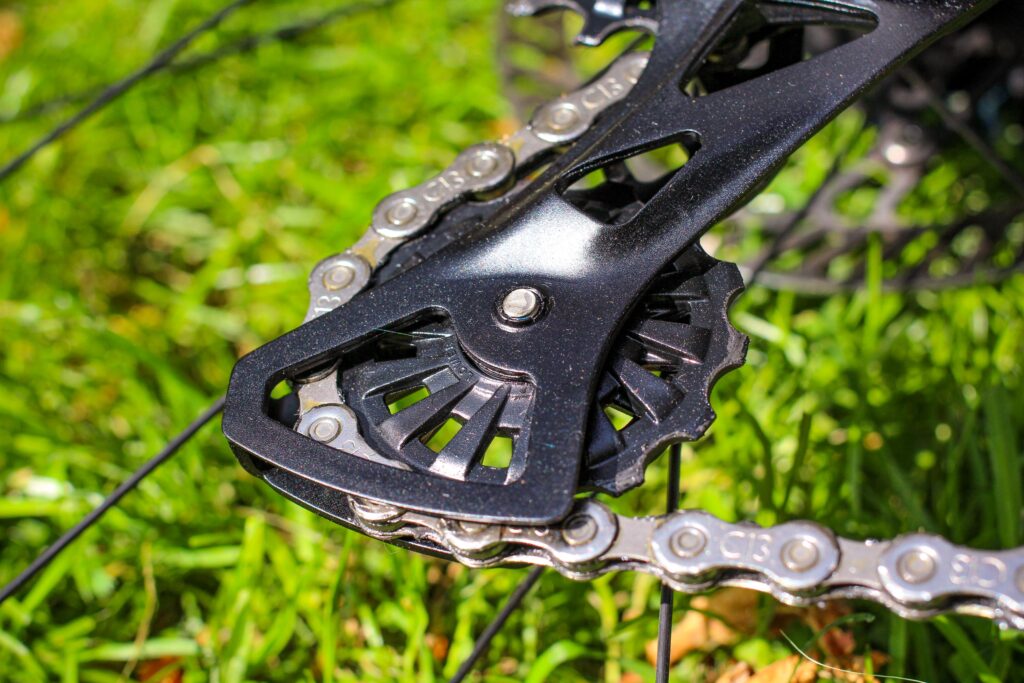
What Jockey Wheels Actually Do
Your rear derailleur has two pulleys. The upper one — the tension pulley — sits directly below the cassette and guides the chain through the derailleur cage. The lower one — the guide pulley — keeps chain tension consistent as you change gear.
Both are under constant load. Both collect grit, dried-on lube, and chain debris. Over time, the teeth wear down, the bushings or bearings inside degrade, and the precise engagement that gives you crisp indexing starts to soften.
It's gradual. That's exactly why it gets overlooked.
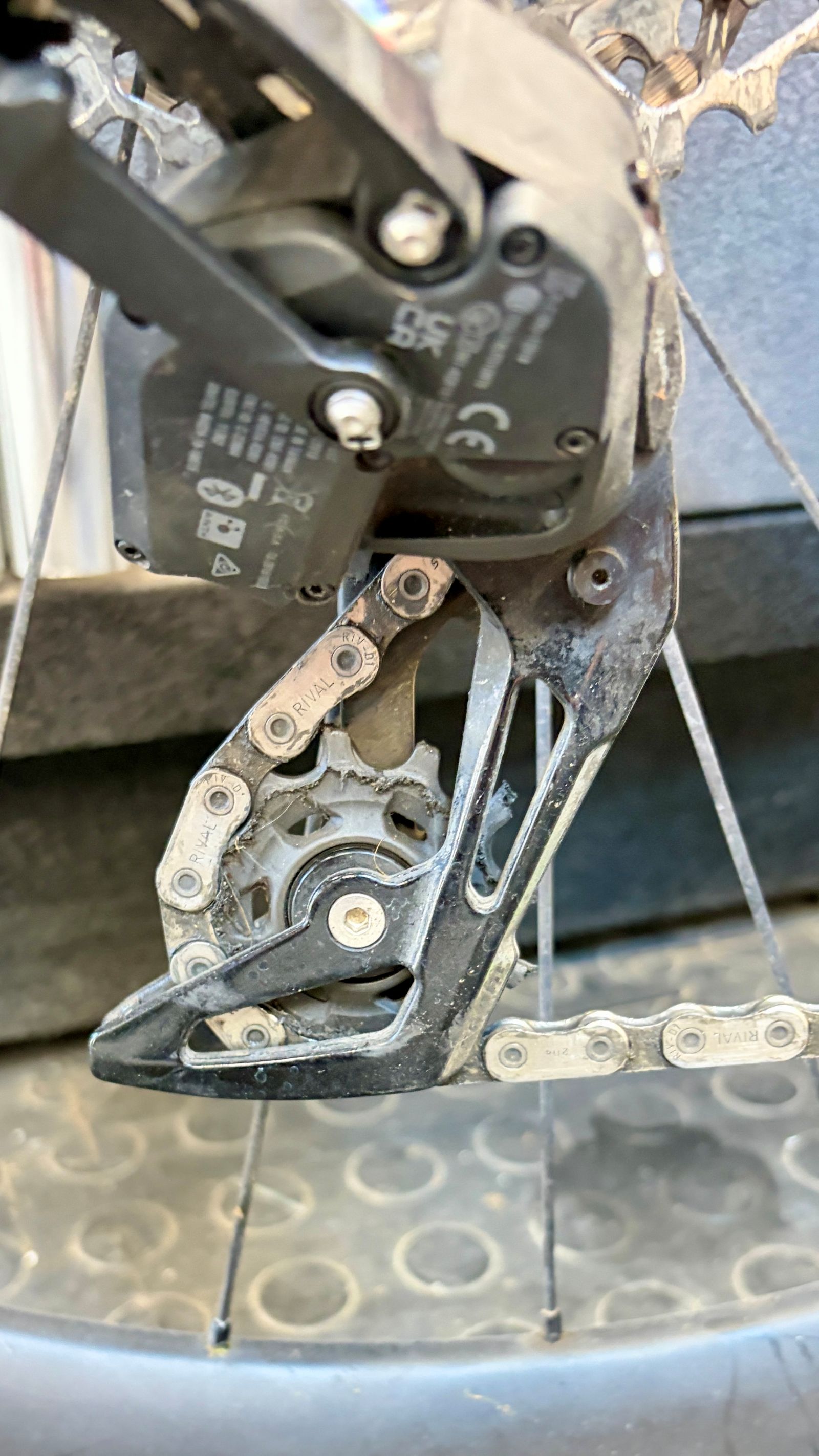
What Worn Jockey Wheels Look Like
You don't need a calliper or a wear-checker to spot a jockey wheel that's past its best. A visual check and a quick feel tells you most of what you need to know.
Look for these signs:
Teeth that have become pointed or hooked rather than smoothly rounded
Visible side-to-side wobble when you spin the pulley by hand
Grinding, rough, or notchy rotation — especially under load
A derailleur cage that sits at a noticeably different angle than usual
Chain skipping or ghost-shifting that doesn't resolve with cable adjustment
Excessive chain debris compacted into the pulley teeth — not just surface grime
That last one matters. A small amount of build-up is normal and cleans off easily. Dense, baked-on material packed into the tooth roots suggests the pulley has been running in a poor state for some time.
When to Start Looking — Mileage and Triggers
There's no single figure that applies to every rider. A gravel bike ridden through North Somerset mud in January will wear its drivetrain faster than a road bike that sees nothing worse than dry tarmac.
As a practical starting point:
Inspect at every chain change. If you're replacing a chain, the pulleys have done the same work. Check them while the drivetrain is already stripped.
Inspect at every cassette change. Cassette and jockey wheel wear tend to track each other. If the cassette is done, check the pulleys.
Consider replacement every second or third chain. On most setups, jockey wheels outlast a single chain but won't last indefinitely. Two or three chain cycles is a reasonable inspection window for heavier riders or those riding in harsh conditions.
Check after any significant crash or derailleur strike. Impact loads can damage pulley bearings without obvious visible damage.
The key principle: treat jockey wheels as part of the drivetrain system, not as bolted-on afterthoughts.
Did You Know?
Shimano replacement pulley wheels are directional — fit them the wrong way round and you'll get poorer chain engagement and faster wear, regardless of how new they are.
What Happens If You Leave Them Too Long
A jockey wheel with worn teeth no longer engages the chain cleanly. The chain sits high on the tooth tips rather than seating fully, which introduces slop into every gear change. That slop makes precise indexing harder to achieve and harder to maintain.
Worn bearings or bushings inside the pulley add lateral movement. The chain path shifts slightly, increasing side-load on the cassette and chainring teeth.
None of this is catastrophic in isolation. But it compounds. A drivetrain that's running with worn pulleys, a stretched chain, and a starting-to-go cassette is doing cumulative damage faster than any single component alone.
We approach every service methodically — and part of that is not treating the drivetrain as a collection of separate parts. It's a system. What's tired tends to accelerate what's adjacent.
Not All Replacement Pulleys Are Equal
The jockey wheel market is wide. There are cheap unbranded plastic pulleys that will technically spin, and there are quality OEM replacements and aftermarket ceramic-bearing options at the other end.
Our position on this is straightforward. We choose workshop-approved components that we've actually used and tested — selected for fit, function, and long-term reliability. For most riders, a good-quality OEM or equivalent replacement does the job well and represents fair value. Ceramic-bearing pulleys have their place, particularly for riders who are genuinely chasing friction savings, but they're not essential for the commuter or weekend rider who just wants a drivetrain that works properly.
What matters more than bearing specification is fitment. Pulleys must be the correct tooth count for your groupset. Many are directional. The bolts must be torqued correctly — too tight and the pulley can't spin freely; too loose and the cage flexes.
Things to confirm before buying replacement pulleys:
Tooth count (typically 11T for the upper pulley, 11T or 13T for the lower — varies by groupset)
Compatibility with your derailleur model and speed rating
Bearing type (bushing or sealed bearing) — match or upgrade as appropriate
Directional orientation markings, if present
Replacing Them as Part of a Wider Service
The most sensible time to swap jockey wheels is when the rest of the drivetrain is being attended to. If we're already degreasing and rebuilding a chain, or stripping the cassette for cleaning and measurement, the additional time to inspect and replace the pulleys is minimal.
That's not upselling. That's reducing repeat labour and making sure mismatched wear doesn't undo fresh parts.
There's no value in fitting a crisp new chain over pulleys that are already hooked and rough. The new chain will wear faster against worn components, and you'll be back sooner than you should be. Done properly, a drivetrain refresh addresses the whole system in one go.
Did You Know?
Workshop best practice supports replacing chain, cassette, and pulley components together — mismatched wear between parts shortens the life of everything new you fit.
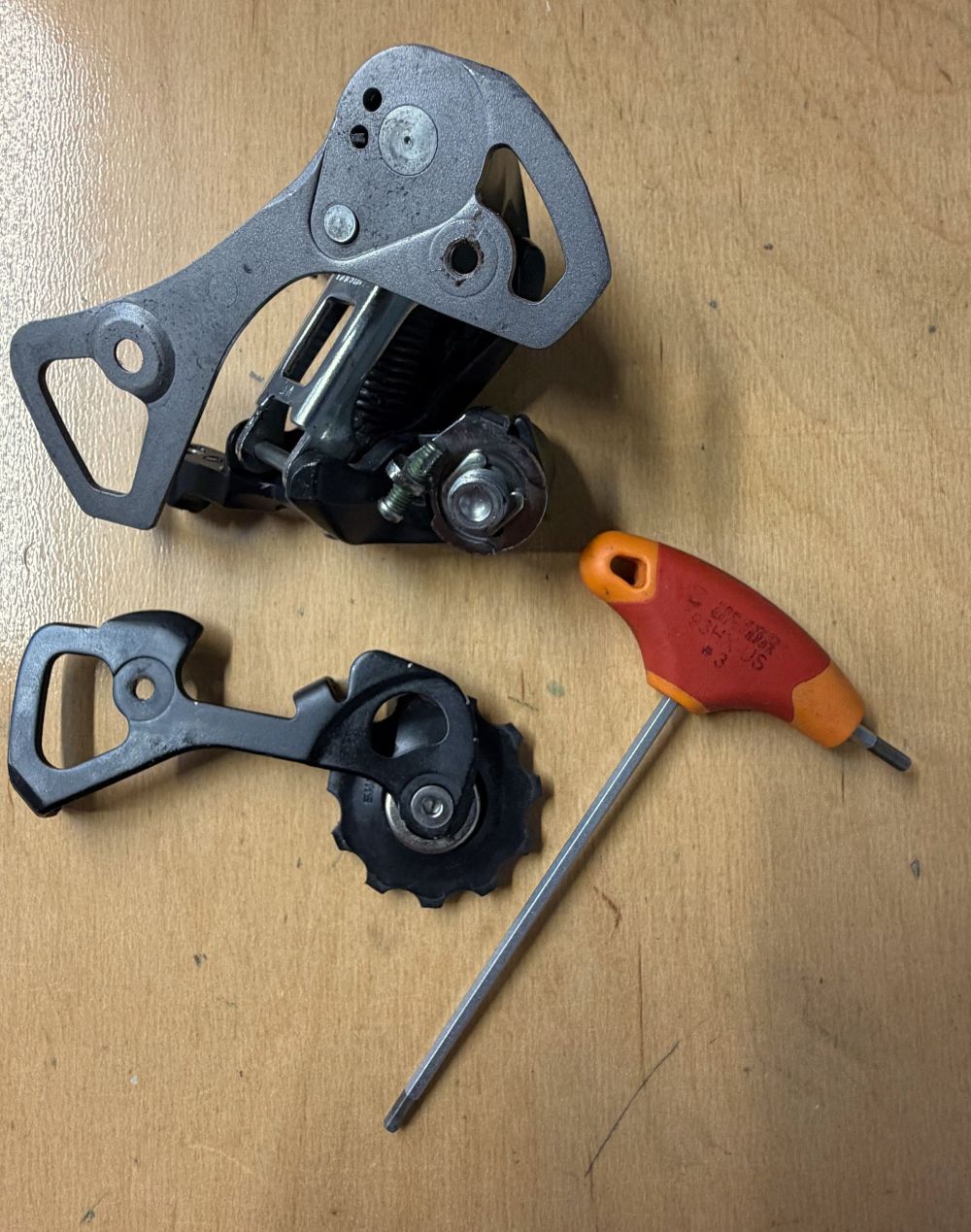
Can You Replace Jockey Wheels at Home?
Yes, in most cases. The job requires a Torx key (usually T10 or T25, depending on the derailleur), basic degreaser, and a bit of patience with reassembly. The main risks are cross-threading the pulley bolts into the cage, fitting directional pulleys back to front, or over-tightening and binding the bearing.
If you're comfortable with basic drivetrain work, it's a reasonable home job. If you're less confident — or if the derailleur itself has any alignment issues — it's worth having a workshop take a look at the whole rear end together.
We document our findings during every service, torque-check critical fasteners, and road-test where appropriate. Jockey wheels are often spotted and flagged at that stage — before a rider has even noticed any shift quality degradation. Accurate diagnosis, rather than waiting for the problem to become obvious, is how you avoid the bigger bills.
A Simple Checklist
If you're unsure where your pulleys stand, run through this:
Spin each pulley by hand — it should rotate freely and smoothly
Check for side wobble — any lateral play suggests bearing wear
Look at the tooth profile — pointed or hooked teeth need replacing
Check for compacted debris in the tooth roots
Note when your chain was last changed — if it was more than two chain changes ago and you've never replaced the pulleys, inspect carefully
If you're unsure, bring the bike in. Our workshop services include a full assessment on arrival, and we'll give you a clear, itemised picture of what needs attention before any work begins. No faff, no assumptions — just an honest look at what's actually there.
You can see our full service menu and pricing beforehand, and we'll approve everything with you before we proceed. That's how it should work.